
Claddagh Records Feature
The Creation of The Chieftains
Real to Reel: Garech Browne & Claddagh Records
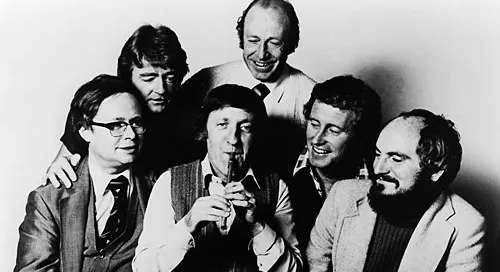
In an extract from his book ‘Real to Reel: Garech Browne & Claddagh Records,’ James Morrissey remembers the early days of the pioneering traditional Irish music group, The Chieftains.
In 1959 Moloney, a talented young piper mentored by Leo Rowsome, was recruited by the composer Seán Ó Riada to arrange the music for the play The Golden Folk at the Abbey Theatre, Dublin. This led to Ó Riada forming the group Ceoltóirí Chualann, playing Irish music in a chamber orchestra style with Ó Riada on harpsichord and Moloney, Sean Potts (whistle), and Michael Tubridy (flute). The arrangements, with musicians playing in various combinations, using harmony rather than the unison playing of Irish dance bands, would go on to have a great influence on the musical style of the Chieftains.
Paddy Moloney was part of Dublin's vibrant music scene. He regularly attended impromptu sessions at Garech Browne's flat, where music and camaraderie flowed freely. Inspired by Moloney's appearance on Ciarán Mac Mathúna's radio show "A Job of Journeywork," Garech proposed forming a group that would promote traditional Irish music, staying true to its roots and instrumentation.
Paddy wanted to call the group The Quare Fellas, the title of a Brendan Behan play. Garech, while a friend of the writer and playwright, wasn’t so sure. John Montague, a director of Claddagh, suggested a name based on the title of his book, Death of a Chieftain.
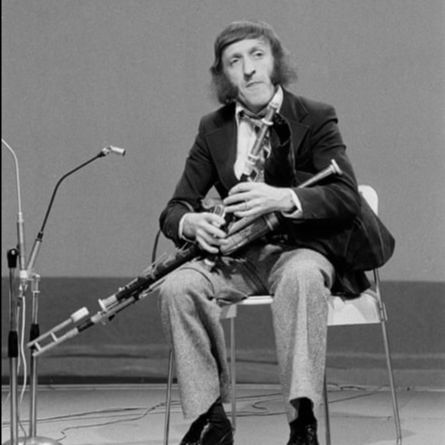
Moloney had a vision. He wanted to create a sound that had never been heard before. He was keen to experiment, and his collaborative work with Seán Ó Riada allowed him to do just that. Paddy realized there was now an eager audience for this fusion of styles and instruments. To fully realize the sound that had so long eluded him, he formed The Chieftains in 1962.
The original line-up consisted of Paddy Moloney as leader (uilleann pipes and tin whistle), Seán Potts (tin whistle), Michael Tubridy (flute and concertina), and Martin Fay (fiddle). “There remained the unresolved question of who should play what was then a rarely encountered Irish percussion instrument, the bodhrán,” recalled Garech.
Garech knew of a player living in a remote area in County Westmeath, a man in his seventies: “I told Paddy if he wanted the best bodhrán player in Ireland, he had to have David Fallon, a farmer with big thumbs who lived in Castletown Geoghegan. The only problem was that his wife didn’t like him playing the bodhrán, and so he had to keep it in an outhouse. Anyway, Paddy and I headed off to meet him. I remember we had to go to a neighbor’s house to hear him play; we knew immediately he was our man.”
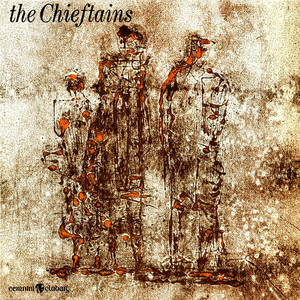
The first album was eponymously titled The Chieftains. The recording sessions in Peter Hunt Studios, Dublin, were recorded by Morgan O’Sullivan, a young studio engineer who would go on to become a successful broadcaster and, in more recent years, one of the leading contributors to the Irish film and television industry, winning awards for Vikings, Vikings Valhalla, and The Tudors.
The studios were used for the recording sessions of many Claddagh albums. Morgan O’Sullivan recalled, “May’s music shop was on the ground floor of the building, and it was run by Joan Smith, who later worked with RTÉ. Whenever we were making a recording, we would have to go downstairs and ask her to please turn down the music, as our studios were not fully soundproof.”
One of the eleven tracks, a slow air, A Dhruimfhionn Donn Dílis, was dedicated to Brendan Behan, a friend of Paddy Moloney’s and a frequent visitor to Luggala and to Garech’s flat.
“The renewal of interest in Irish folk music, which began in the years after the Second World War and was then dismissed as a mere nine days’ wonder, is now generally recognized as one of the things from our past that gives life in the second half of the twentieth century its distinctive color and flavor,” broadcaster Seán Mac Réamoinn wrote in the sleeve notes. “The music on this disc … is traditional in the deepest sense. It has been subjected to the ‘arrangement’ neither of the academic music room nor of the pop factory. Every tune is played as you would hear it in a country kitchen or a village pub,” he added.
“Paddy was very keen on getting a different sound and one that would highlight all the different instruments, while Garech’s main aim was to preserve Irish culture. They were both obsessive in their own way,” recalled Morgan O’Sullivan.
“I remember going to Spiddal with Garech in his Mercedes 600 to record a sean-nós singer. I was in the front, Garech was driving, and in the back was Princess Purna, ever so regal, along with an Irish wolfhound and our recording equipment. I think it must have taken three days to get there. We had a lot, a lot of stops.”
The album sleeve was designed by Edward Delaney, whose family had worked at Castle MacGarrett for Garech Browne’s father. Although they did not know each other when Garech lived in County Mayo, they became long-standing friends, and Delaney went on to design several iconic covers for The Chieftains. A statuesque ten-foot bronze sculpture by Delaney, The Good Shepherd, stands elegantly in Luggala.
The arrival of the first Chieftains’ album was celebrated by Garech’s mother, Oonagh, with a party at Luggala at which Princess Grace of Monaco was guest of honor.
Seán Ó Riada hailed the album as ‘splendid’ in Hibernia magazine.
The group’s second album, Chieftains 2, was recorded in 1969 at Craighall Studios, Edinburgh. Seán Potts and Martin Fay were added to the lineup, while Peadar Mercier replaced David Fallon, who retired on the grounds of age. Seán Keane also became a permanent member. Not happy with the sessions, the group headed to London, to Abbey Road Studios, where the new album was perfected. Paul McCartney, John Lennon, and Yoko Ono dropped by to see how the musicians were progressing.
One of the standout tracks from the album was The Foxhunt, previously a tune traditionally played by pipers, but now given a full, multi-layered treatment. The band was breaking new ground, though Seán Ó Riada was less than impressed.
The following year, during a radio interview broadcast from The Hibernian Hotel, Ó Riada announced his decision to disband Ceoltóirí Chualann, the Irish traditional band he had founded, which included several of the founding members of The Chieftains. It came as a complete shock to everyone, including Garech. The composer declared, “Regarding what The Chieftains are doing, I cannot feel anything but sympathy; they would not have come into existence except for the existence of Ceoltóirí Chualan.”
Moloney felt that Ó Riada was being unfair and felt it was jealousy among musicians. “Fair enough, I’m often that way myself. I mean, jealousy among pipers is living. It’s part of our tradition, and I think Sean had that part of the tradition in him as well.”
Garech was shocked and deeply upset by what he regarded as an unnecessary public spat between two of his dearest friends: “Some things were said that would have been better left unsaid. Silence can soar above everything.”
The band followed up the success of their second album with Chieftains 3. A star-studded launch party was held at the Irish Arts Center in New York for the U.S. release of the album, with John Lennon and Yoko Ono amongst the invited guests.
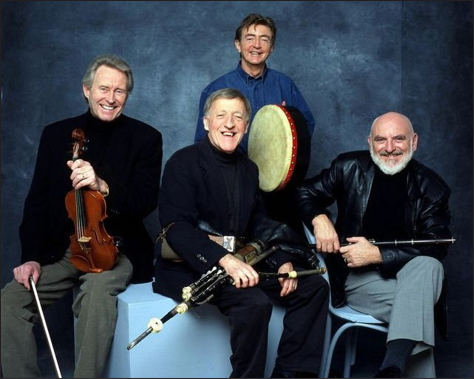
While the band did not perform in public until 1964 and only turned professional in the mid-1970s due to a widely acclaimed concert in the Royal Albert Hall, London, on St. Patrick’s night 1975, their initial reputation was based almost entirely on the recordings. The first album achieved almost cult status when featured by John Peel on his BBC Radio 1 Top Gear broadcasts, and when they did perform live, sometimes at pop festivals, their suits and ties made them unlikely targets for hippy adulation. But they and their music captivated audiences of all types and ages. Over the years, Moloney was sought after as a session or guest musician by artists such as Jagger, Dolly Parton, Stevie Wonder, Luciano Pavarotti, and even the Muppets.
Real to Reel: Garech Browne & Claddagh Records by James Morrissey—a new large-format hardback book together with a vinyl box set celebrating the life of Guinness heir Garech Browne and his quest to preserve Ireland’s musical and spoken-word heritage with Claddagh Records. The 228-page book is accompanied by Masters of Their Craft, the Claddagh Collection LP, presenting 17 remastered tracks from Claddagh’s immensely rich catalogue, including a never-before-released poem from Pulitzer Prize for Poetry and T.S. Eliot Prize-winning poet Paul Muldoon.
Real To Reel: Garech Browne & Claddagh Records is available from claddaghrecords.com and selected bookstores.
About Claddagh Records
Claddagh Records is an Irish traditional and folk music label and online store based out of Dublin, Ireland. It has long served as a cornerstone in the preservation of traditional Irish music, spoken word, and song. With a catalog that includes legendary artists like The Chieftains, Seamus Heaney, Christy Moore, and Liam O’Flynn, Claddagh Records continues to champion Ireland’s cultural past while ushering in the new wave of Irish music with artists like DUG, Niamh Bury, ØXN, and Lemoncello. In 2021, Claddagh relaunched its online store, CladdaghRecords.com, with the goal of becoming the first stop for Irish traditional and folk music.
Claddagh Records is the official Milwaukee Irish Fest ticket partner.
Stream the best music from Claddagh Records over the past 65 years.

Exclusive Offer for Milwaukee Irish Fest Fans
Explore Claddagh Records' collection and history below. Sign up for their email newsletter to get 15% off your first order!